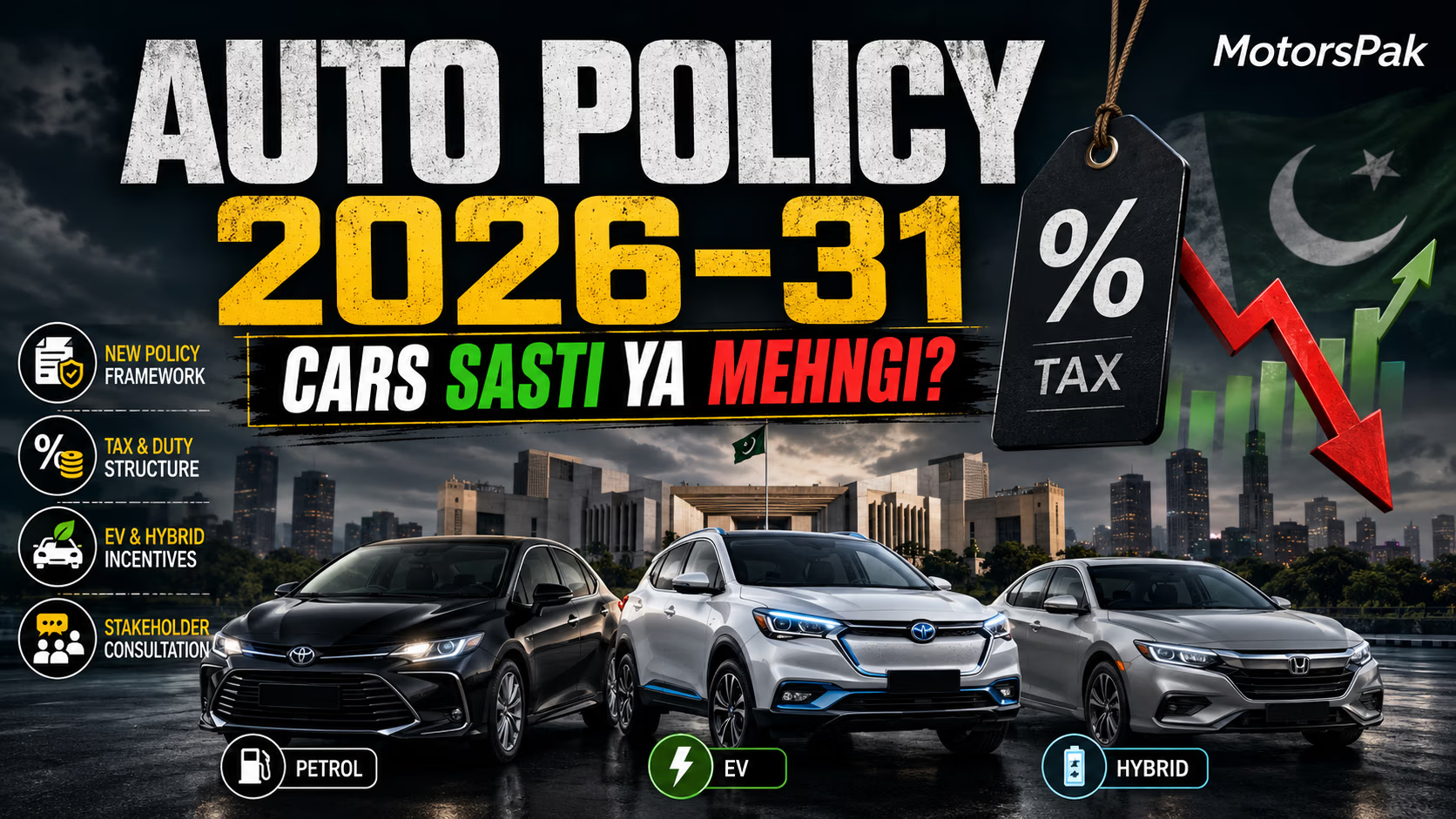
Introduction
Pakistan’s automobile market is once again at an important turning point. With the upcoming Auto Policy 2026–31 under discussion, car buyers, local assemblers, importers and new energy vehicle brands are all waiting to see what direction the government will take.
The biggest question for buyers is simple:
Will cars become cheaper or more expensive after the new auto policy?
At this stage, the final policy has not been officially announced. However, recent industry reports and market discussions suggest that taxation, incentives, environmental levies, used imports and new energy vehicles could all become major parts of the new policy direction. The Auto Policy 2026–31 is reportedly still being finalized, with different stakeholders pushing for their own interests. (Business Recorder)
Why This Auto Policy Matters
The auto policy is important because it can directly affect:
- New car prices
- EV and hybrid incentives
- Petrol vehicle taxation
- Used car imports
- Local assembly protection
- Competition in the market
- Long-term investment in Pakistan’s auto sector
For ordinary buyers, this means the policy could influence whether they should buy now or wait.
Pakistan’s car market is already under pressure due to high prices, taxes, financing costs and lower purchasing power. Any change in duties or GST can quickly affect showroom prices.
EVs, Hybrids, PHEVs and REEVs: Tax Treatment Could Be the Biggest Issue
One of the most important discussions is around the tax treatment of electric vehicles, hybrid vehicles, plug-in hybrids and range-extended EVs.
At the moment, EVs and hybrids have benefited from lower tax treatment compared with normal petrol vehicles. Recent reports mention that electric vehicles have been enjoying 1% GST, while hybrid vehicles have been taxed at 8.5% GST. However, there is speculation that these concessions could be reviewed in the upcoming budget and policy discussions. (Pakwheels)
This is important because if these lower rates continue, EVs and hybrids may remain attractive for buyers. But if the tax rate moves closer to the standard GST level, prices of hybrid and electric vehicles could increase.
What Happens If GST Increases?
If GST on hybrids or EVs increases, the impact could be simple: higher prices for buyers.
For example, a change from a lower GST rate to a higher tax rate can add a significant amount to the final invoice price of a vehicle. This would especially affect buyers considering cars such as:
- Hybrid sedans
- Hybrid crossovers
- Plug-in hybrid SUVs
- Range-extended EVs
- Fully electric vehicles
This is why many buyers are currently confused about whether they should book a vehicle now or wait for the final policy announcement.
NEVs Could Still Get Support
There is also another side to the discussion. Reports suggest that the upcoming policy may support New Energy Vehicles, commonly called NEVs. This category can include BEVs, PHEVs and REEVs, depending on how the final policy defines them.
Some policy discussions have suggested incentives for NEVs, including lower sales tax and lower import duties, to encourage Pakistan’s shift toward cleaner transport. (Business Recorder)
If the government continues incentives for NEVs, this could benefit vehicles like EVs, plug-in hybrids and range-extended EVs. It may also encourage more brands to introduce modern electrified vehicles in Pakistan.
Petrol and ICE Cars May Face More Pressure
Petrol cars, also known as ICE vehicles, could also be affected by the new policy.
One major discussion is the possible introduction or increase of an environmental levy on conventional petrol vehicles. Recent analysis suggests that environmental levy discussions for ICE vehicles could become part of the policy debate, with possible rates being discussed in the range of 5% to 15%. (Business Recorder)
If such a levy is introduced or increased, petrol cars could become more expensive. This would push the market further toward hybrid, plug-in hybrid and electric options.
However, the final impact will depend on how the government balances revenue collection, environmental goals and affordability for buyers.
Used Imports vs Local Assemblers
Another major part of the new auto policy could be the treatment of used imported cars.
Used imports are a sensitive issue in Pakistan. Buyers often support them because they can increase choice and competition. Local assemblers usually oppose easier import rules because they argue that it can hurt local production, localization and investment.
The upcoming auto policy is expected to be aligned with the National Tariff Policy 2025–30, and used car imports have been described as one of the major points of debate. (Business Recorder)
If import rules become easier, buyers may get more options. But if protection for local assemblers continues, locally assembled cars may remain the main focus of the market.
What This Means for Car Buyers
For car buyers, the situation is not fully clear yet. The final policy will decide the real impact.
But based on current discussions, these are the possible scenarios:
Scenario 1: EV and hybrid incentives continue
If lower tax rates and incentives continue, EVs, PHEVs and REEVs may become more attractive for buyers.
Scenario 2: GST increases on EVs and hybrids
If GST moves closer to the standard rate, hybrid and electric cars could become more expensive.
Scenario 3: Petrol cars face environmental levy
If ICE vehicles face additional environmental charges, conventional petrol cars could also become more expensive.
Scenario 4: Used imports become easier
If import barriers reduce, buyers may get more choice, but local assemblers could face more competition.
Scenario 5: Policy supports local manufacturing
If the government focuses on localization and local assembly, brands investing in Pakistan may get more support.
Should You Buy Now or Wait?
This is the question many buyers are asking.
If you are planning to buy a car urgently, waiting may not be practical. But if your purchase is flexible, it may be better to wait until the final policy and budget details become clear.
For EV, hybrid, PHEV and REEV buyers, waiting for official tax clarity is especially important because even a small tax change can create a big price difference.
For petrol car buyers, the key thing to watch is whether any new levy or duty is added to conventional vehicles.
Final Verdict
The Auto Policy 2026–31 could become one of the most important policy decisions for Pakistan’s automobile market in the coming years.
At this stage, nothing should be treated as final. Current reports only show that taxes, incentives, environmental levies, used imports and local assembly protection are all under discussion.
For buyers, the safest approach is simple:
Do not make a decision based only on speculation. Wait for the final policy announcement, compare the impact on your preferred car, and then decide whether to buy now or wait.
The coming policy will show whether Pakistan wants to make cars more affordable, push the market toward new energy vehicles, protect local assemblers, or increase tax revenue from the auto sector.
One thing is clear: whatever the final decision is, it will directly affect car prices in Pakistan.
FAQs
Is Auto Policy 2026–31 officially announced?
At the time of writing, the final policy has not been officially announced. Current discussion is based on reports, proposals and market speculation.
Will hybrid cars become expensive in Pakistan?
Hybrid cars could become expensive if existing lower GST treatment is revised upward. However, the final impact will depend on the official policy and budget announcement.
Will EVs become cheaper or expensive?
EV prices may remain attractive if incentives continue. However, if tax concessions are reduced, EV prices could increase.
What is REEV?
REEV stands for Range-Extended Electric Vehicle. In simple words, the wheels are driven by an electric motor, while the petrol engine mainly works as a generator to charge the battery.
Should I buy a car before the new auto policy?
If your purchase is urgent, you can continue with your plan. But if you are considering an EV, hybrid, PHEV or REEV, it may be wise to wait for official tax clarity.